
Notes from the first week I ran on my own method: what a day held, which sessions reached which people, where the plan gave way, and what the next week does differently.
So what does happen at a six-day longevity retreat, or at least at ours? It opens by measuring the people who've come, because the programme is supposed to be built from their own numbers, and from then on the days share one outline: a few fixed blocks that don't move, sessions where I draw and explain a piece of how the body works, time in the sauna, the cold plunge and under red light, yoga, meals, days out, and sessions that show each person what their own measurements say. We designed the week to keep phones and screens out of it. That's the short answer.
The long answer is less flattering and more useful. A programme built from each person's measurements still reaches people unevenly, person by person, and I hadn't designed the week to notice that early enough. What follows is the detail: where the plan held, where it moved, three changes to the design, and the one thing I won't claim yet. If you'd like the reason we built a week like this at all, I set it out when I wrote about why health systems spend so little on prevention.
Key points
-
Every day of the week followed the same outline, and the fixed blocks in it were what helped people most.
-
One session could be the most useful hour of the week for one person and pass another by, and I couldn't predict in advance which person it would be.
-
The order of an explanation decided whether a hard topic landed.
-
The timetable kept changing as the week went on, partly because several things were being done for the first time and partly because real people move any plan, so the next one is planned as something that moves around a few points that stay put.
-
A week without screens that also shows people their data on screens asks for two things at once, and I haven't settled which one gives.
-
Next time people run the contrast block themselves, the hour that frees goes into one-on-ones, and the hosts get breaks written into the schedule.
-
I don't claim the week works. The measurement that could show it takes months and hasn't come in yet.
This is an educational and strategic perspective, not personal medical advice.
The views are the author's own and not statements by Atlas Cove Lda.
The one prediction that held
Lisa and I kept the week after the retreat light on purpose. We'd agreed on it before the first person walked through the door, a smaller load and fewer things to decide, because we had a fair idea of what hosting other people for six days would take out of us.
We were right. I've written before about stress and recovery drawing on one shared budget, the idea that your nervous system keeps a single account for training, work and everything else, and running a week for other people turns out to be a heavy spend from it. It pays nothing in while it runs, and the bill arrives the week after, once the hosting has stopped.
I'm a bit proud of that one. It's the only part of the week I called correctly in advance, and I'd like it on the record before the rest, because the rest is mostly about what I didn't see coming.
Why the same session reaches people so differently
This is the finding I'd put first, and it shouldn't have surprised me. Everyone sat through the same sessions. For some people a given hour was the most useful thing that happened to them all week, and for others the same hour went by without leaving much behind. Nor was it always the same session: an hour that lifted one person hardly touched the one beside them, and more than once a session mattered most to precisely the person I'd have bet against.
Two sessions show the pattern better than any summary. In one I drew what the hormones do across a night, curve by curve on a whiteboard, hour by hour, talking while I drew, and it worked: people followed the curve with me as it grew, and their questions came from exactly where I'd hoped they would. In the other I tried to explain how we turn fat and glucose into fuel, and it didn't work. That one was my fault. The topic is heavy, I'd walked in halfway up it, and it needed a gentler first step and a clearer route to the top, which it'll get next time.
The sequence of an explanation decides whether anyone reaches its end. That's a dull lesson and a true one, and I'd rather have it dull and true than clever.
The person-by-person part I thought I'd planned for. Or rather, I'd planned for it as a sentence. Everyone arrives with their own preset: their strengths and their weak points, the problem they actually came with, and the things they already do well and don't need help with. I built the whole week on the premise that people differ, which is why it begins with measuring and only then gets to a timetable. And still I stood there at the whiteboard expecting each session to land the same way for everyone. It didn't.
Seeing it sooner
What I haven't worked out is how to know early. It's possible that some of the signal is already there in what we ask people and measure before the week begins, and that part of it only shows once the days are running, by which point it's late. I don't know which share is which. I've brought that question home with me, and I'd rather leave it standing here as a question than write as though three weeks had been enough to answer it.
There's a version of this for you, even if you'll never run a week for anyone. You have a timetable too, and in it there's probably one thing you'd defend hard if someone tried to take it away: a session, a routine, a rule you've decided isn't up for discussion. Has anyone checked recently whether it does anything for you? For you specifically, this year, and not for people on average. Most of us keep two or three of those without ever testing one. I kept a whole week of them until actual people began to rearrange it.
What ran as drawn, and what moved
The plan on paper and the week as it happened were a long way apart. Some of it held completely. The hospitality held, the meals held, yoga and the excursions held, all of it as designed, which is exactly why it gets this one sentence and no more.
The timetable is the other story. I'd expected it to drift a little, and it drifted a lot, changing from one day to the next. I don't regret that. The alternative was keeping to a plan that no longer matched the people it was written for, and that would have been worse. Part of the movement comes from doing a number of things for the first time. The rest, I suspect, is simply what real people do to any plan for a week, however good the plan is, and I'm not going to fight that part.
What I'd change is the way the moving gets done. We did it by hand, one session at a time, deciding as we went, and something you end up doing that often deserves a method of its own. What I have in mind looks more like sprint planning in a decent software team than like a printed timetable: a handful of commitments that stay where they are, and everything between them planned on the understanding that it will shift.
Fixed blocks, and why on time isn't the same for everyone
The fixed blocks earned their place. What helped people most was the same outline to every day, a few anchors they could lean on while everything else around them was new, and I'd keep all of them.
What I hadn't allowed for is that a fixed hour doesn't feel fixed in the same way to everyone. People bring their own idea of what punctual means, so a block fixed to a set time already feels early to one person and late to another before anyone has said a word about it. That's a real difference between people and I'd like to design for it properly. Designing for it doesn't mean letting go of the clock. The anchors stay where they are; what changes is how we account for the people arriving at them.
A screen-free week that shows you your data
Then there's the contradiction I built into my own plan and only saw when it was in front of me. The plan was a week without electronics, phones and screens put away for six days, a break from the device that runs the rest of the year for most of us. I wanted that a great deal. And the same week runs on measurement: numbers taken with devices, then turned into graphs and walked through with you so you can see what your own data says.
Both aims were in the plan. Nobody, and that includes me, had set them side by side and asked how they'd get along, and for an engineer that's an embarrassing thing to discover with guests in the house when it could have been checked on paper long before anyone arrived. They didn't get along entirely. Asking people to go without a screen for a week, then showing them their own results on one, pulls in two directions, and I'd written down both halves without noticing.
I still want both of them. Your own numbers are the reason the week is built around you instead of around a programme, and the absent phone is a large part of why it feels like a week away. Which one gives way, and where, I haven't decided yet. It's on the list.
How those data sessions get built, though, I have decided. I'd led them off the graphs and off my own knowledge, and that was a bit disorganised. In a short session it's too loose, or rather it's loose enough for me and far too loose for whoever is sitting opposite. Next time each one is cut back to what actually needs saying, and whatever time that saves goes to their questions.
Three changes to the design
Three things change for the next week. Two of them are things I'd have defended as essential before this one.
The first loosens the contrast work. Sauna, cold plunge and red light were on the schedule as sessions that a host ran, the same as everything else. They don't need that. People are perfectly able to run that part of an afternoon on their own, and when they do, the hosts get an hour back to spend on one-on-ones, where I'd much rather our time went. Trying to do everything is exactly what crowds out the one-on-ones. It took me a full week of trying to see it.
The second is breaks for the hosts, written into the schedule instead of squeezed into whatever gaps turn up. The schedule I wrote gave the people running the week too few deliberate pauses. We managed, in the sense that nothing fell over. Still, a host who has been on since the morning won't bring much to the late session, however fresh he claims to feel, and I want each of us to walk into every session with something left in the tank. So the pauses go in: short, on paper, and taken, so that whoever leads next has properly stopped before starting.
The third is the timetable itself, which from now on gets managed as the moving thing it is.
Two of those overturn something I'd have called fixed before the week: that the contrast block needed leading, and that the people running a week can do without the recovery they spend that week explaining to everyone else. Both assumptions were gone within six days. As an engineer I find that one hard to laugh off, because the designer of this particular system left himself out of the design.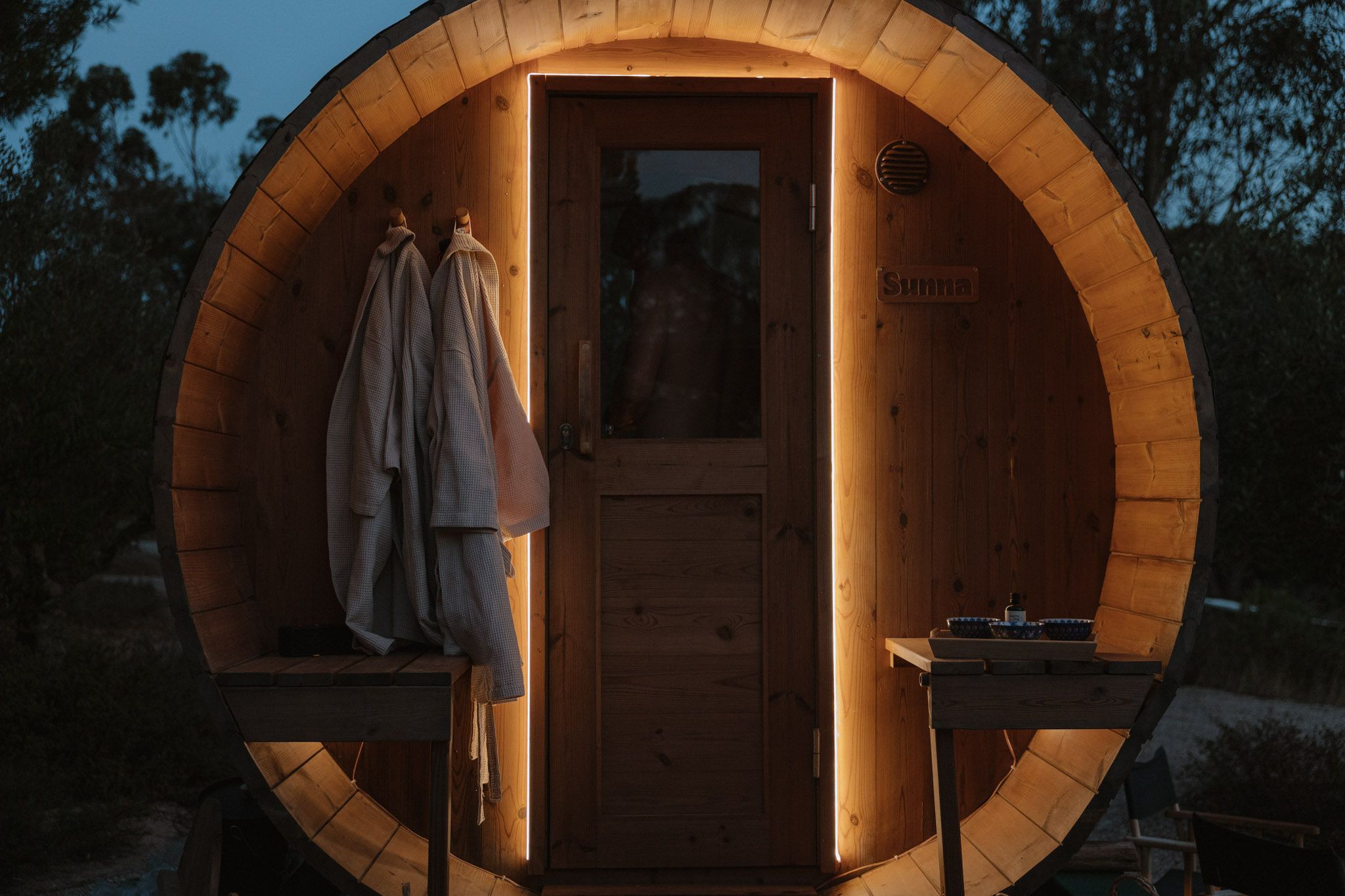
What I can and can't claim
Here's the claim I won't make, stated precisely. I can't tell you that the week works. I'm not in doubt about it, or rather I'm in doubt the way I'd be about any system I haven't measured yet, and the measurement that would settle it runs over months, hasn't come in, and won't arrive faster because I'd like it to. I'd rather say that plainly now than be asked about it later. Lisa made the same point in public when she wrote about why tech founders keep moving into health, and I'm keeping to it.
What I can describe is what I saw. It landed. During the week and after it, people told me that what we'd worked on together had found a place in their lives, what came back was warm, and few things have moved me like seeing something I built do that for someone. None of that is data. Which is precisely the reason I'm going to go and collect some.
What these notes can't tell you
-
They cover one week. It was the first time we ran it, so none of this is a pattern yet.
-
Feedback isn't measurement. What people told me, during the week and in the days after it, is worth hearing and I'm glad of every word of it, and it's still what people told me, which is a different category from anything I could put a number on.
-
Whether the week works is open. The measurement that could answer it takes months and isn't in.
-
I can't yet see early which session will matter for whom. I have two guesses about where the signal might be and no answer.
-
The screens question is undecided. I haven't chosen between the screen-free week and the data shown on screens.
Where Atlas Cove fits
The next week already has the host breaks written into it. Before this first one it hadn't crossed my mind to plan any, and that from the man who wrote an entire essay about the budget. Awkward, I know.
An Atlas Cove week is run by the same small team from the first morning to the last, with us beside you in every session, and that closeness is how we mean to learn, a little earlier each time, which hour of the week is yours. How the week is built from your own measurements is set out on the method page. If you'd like to join one, you can apply here.
Common questions
What does a day at a longevity retreat look like?
In our first week the days shared one outline, built around a few fixed blocks that didn't move, and between them came sessions on how the body works, time with the sauna, cold plunge and red light, yoga, meals, days out, and sessions on your own measurements. The fixed blocks were the part people leaned on most. The hours between them moved as the week went on, and I suspect some of that comes with any week that has real people in it.
Will every session at a retreat be useful for me?
Honestly, no. In the first week the same session was the best hour of the week for one person and passed another by, and I couldn't always tell in advance who would be who. That's why the week starts from your own measurements, and why I want more of the hosts' time going into one-on-ones.
Can you use your phone during a longevity retreat?
We designed the week to keep phones and screens away. The catch, which I only saw once the week was running, is that your own data is shown on screens, as graphs. I want both, and I haven't yet decided which one gives way, or where.
Is there free time at a longevity retreat?
In the first week very little was left open, because even the sauna, the cold plunge and the red light ran as led sessions. The next week changes that: that part of the afternoon becomes yours to run as you like, and the hosts use the hour it frees for one-on-ones.
Does a six-day longevity retreat actually work?
I can't tell you yet, and I'd rather say so than guess. The measurement that would show it takes months and isn't in. What I can say is that people told me, while it ran and afterwards, that what we worked on found a place in their lives, and that's feedback, which I take as a reason to measure properly and as nothing more.
This is an educational and strategic perspective, not personal medical advice.
The views are the author's own and not statements by Atlas Cove Lda.
Tom Wuerden · Co-Founder
Engineer turned Ironman
Read next
Can iron be normal on a blood test and still limit training? What the reference range means
A ferritin inside the range can sit close to empty. What the range measures, why inflammation lifts ferritin, and three questions for your next report.
Are wearable readiness and sleep scores accurate? What the validation studies show
Watches and rings measure sleep timing and pulse well and calculate the rest. What validation studies show about sleep stages, HRV, scores and VO2 max.
Does lactic acid cause muscle burn and soreness? What the evidence shows
Lactate is a fuel your heart and brain burn. It does not cause the burn in your legs, and it is not why you ache two days later.